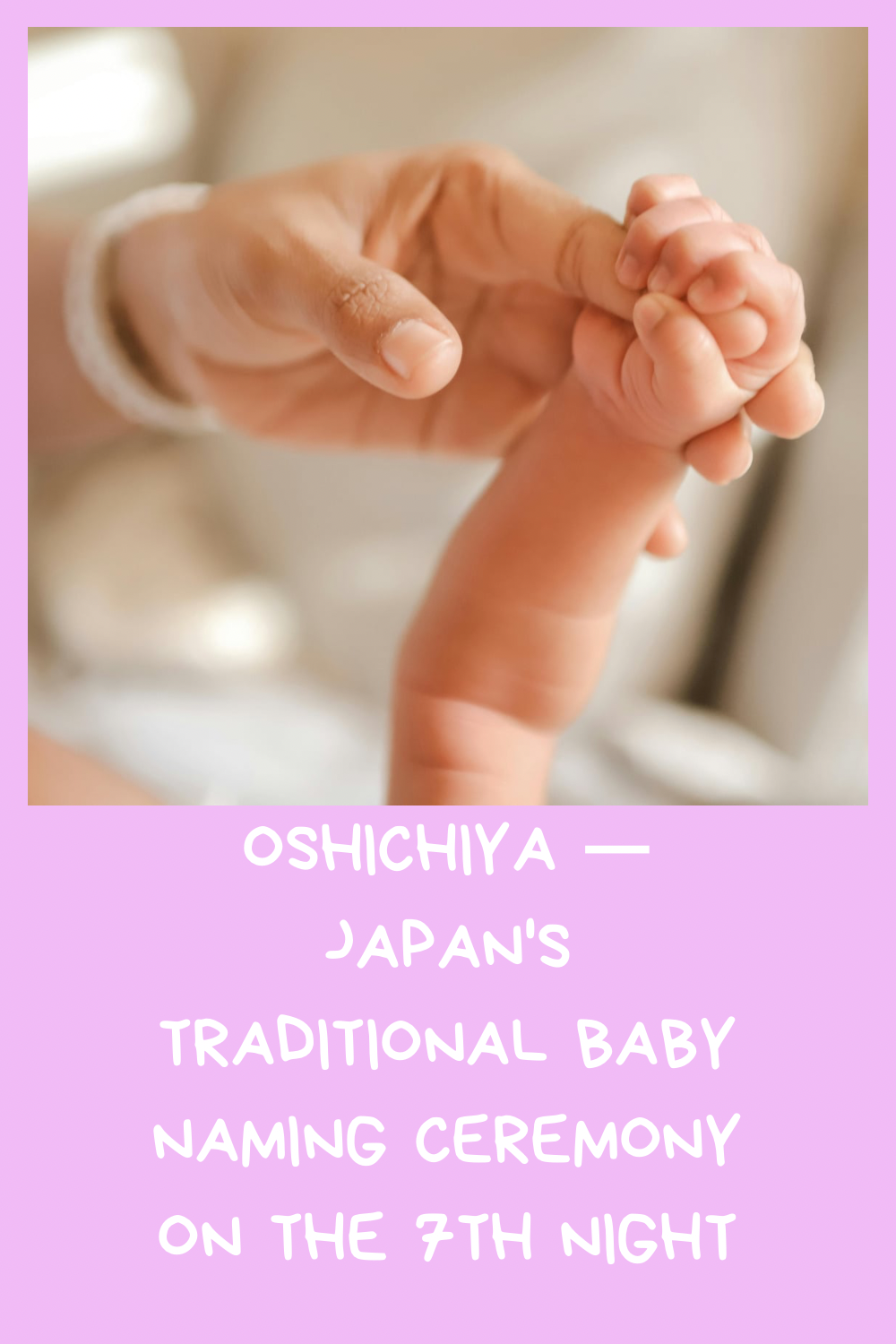
In Japan, the seventh night after a baby’s birth is marked by a quiet but meaningful celebration called oshichiya (お七夜). It is one of the first traditions in a Japanese baby’s life — a moment to formally welcome the new arrival and share their name with the world.
What Is Oshichiya?
Oshichiya literally means “the seventh night.” Historically, infant mortality rates in Japan were high, and surviving the first seven days was considered a significant milestone. The seventh night became the moment when a baby was formally recognized as a member of this world — and celebrated as such.
Today the tradition lives on as a naming ceremony. Families gather on the seventh night after birth to celebrate the baby and reveal their chosen name.
The Naming Ceremony
The heart of oshichiya is the meimei-shiki (命名式) — the formal naming ceremony. A special document called a meimei-sho (命名書) is written with the baby’s name, date of birth, and parents’ names. Traditionally this was written in brush calligraphy and displayed in the home.(The link for a meimei-sho is by Amazon.co.jp, for brush calligraphy is by Amazon.com.)
In Japan, the legal deadline for registering a baby’s name is 14 days after birth. Oshichiya on the seventh night serves as the ceremonial announcement of the name before the official registration.
How We Marked the Occasion
We had our baby’s meimei-sho written in traditional brush calligraphy at Suwa Taisha, one of Japan’s most historic and venerated shrines. Having the name written by hand at such a meaningful place made the document feel genuinely special — something to be treasured rather than just a piece of paper.
We displayed the meimei-sho at home and also incorporated it into our newborn photography session. Seeing the baby’s name written in beautiful calligraphy alongside those early newborn photos is something we will always cherish.
What Families Traditionally Eat
Oshichiya is traditionally celebrated with a festive meal. Sekihan (赤飯), red rice cooked with azuki beans, is a classic celebratory dish in Japan. Tai (鯛), whole sea bream, is also traditional as it is considered deeply auspicious. That said, many modern families celebrate in their own way — the most important part is simply marking the moment.
A Gentle Beginning
What we love about oshichiya is how quietly meaningful it is. There is no grand ceremony, no large gathering required. It is simply a family pausing to say: this person has a name, and we are so glad they are here.
If you are having a baby in Japan, oshichiya is a tradition worth knowing about — and worth observing in whatever way feels right for your family.


コメント