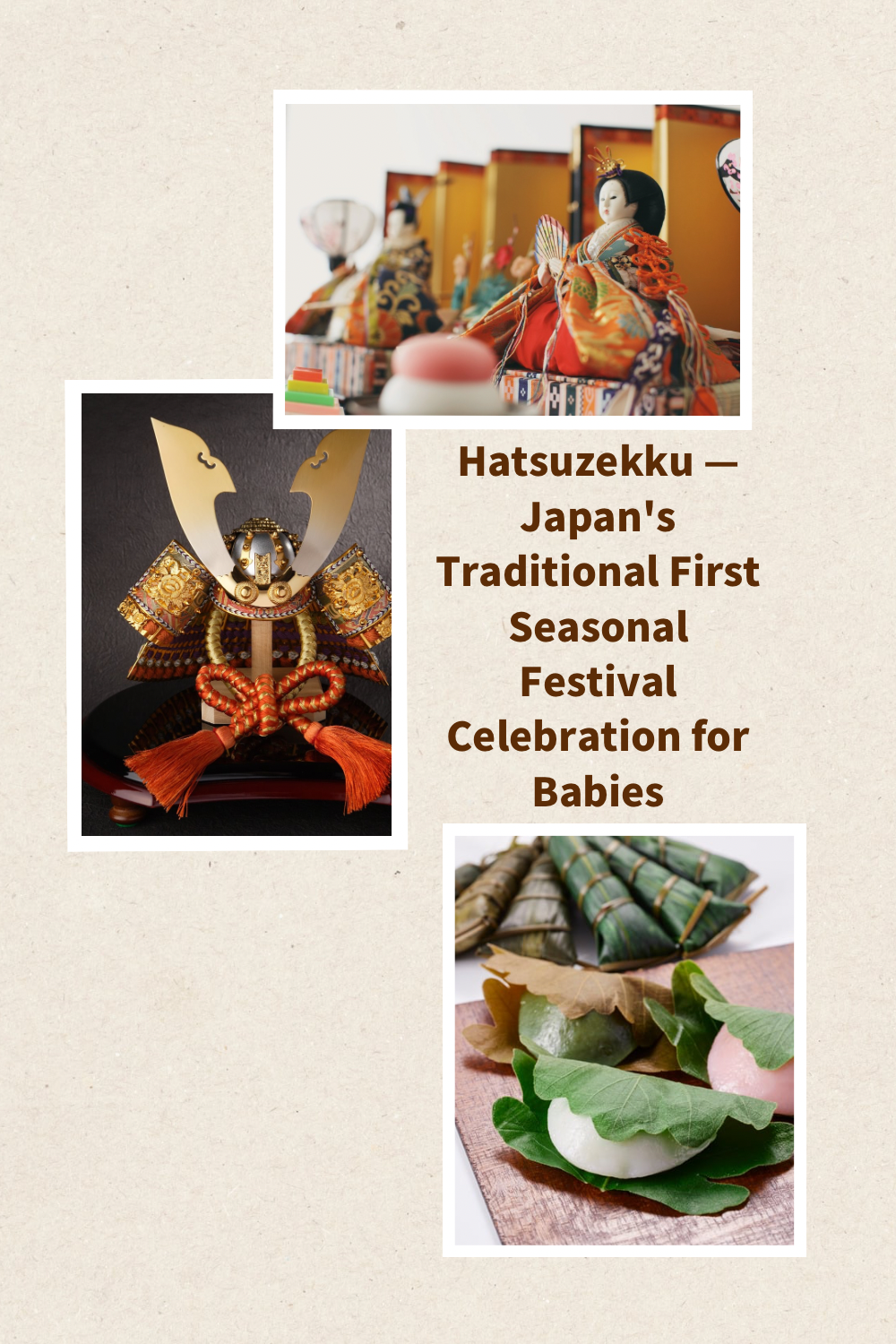
In Japan, a baby’s first seasonal festival is celebrated with a special ceremony called hatsuzekku (初節句). It is one of the most visually striking of all Japanese baby traditions — and one that carries deep meaning about a family’s hopes for their child.
What Is Hatsuzekku?
Hatsuzekku is a baby’s first sekku, or seasonal festival. In Japan, certain days of the year are considered especially significant for wishing children health and happiness. Hatsuzekku is the first time a baby experiences one of these festivals after birth.
The celebration typically takes place during the baby’s first year, and the specific festival depends on the season the baby was born.
Traditional Foods for Hatsuzekku
For girls’ hatsuzekku (Hinamatsuri), traditional foods include chirashizushi, hamaguri soup, hishi mochi (diamond-shaped rice cakes in pink, white, and green), and amazake (sweet non-alcoholic rice drink).
For boys’ hatsuzekku (Tango no Sekku), traditional foods include chimaki (sweet rice dumplings wrapped in bamboo leaves) and kashiwa mochi (rice cakes wrapped in oak leaves). Oak leaves are used because they do not fall until new leaves grow, symbolizing the continuation of the family line.
How We Celebrated
We celebrated our baby’s hatsuzekku at home with family gathered together. Having everyone in one place made the day feel warm and intimate — exactly the kind of memory we wanted to create.
We also had commemorative photos taken to mark the occasion. Hatsuzekku only comes once, and having professional photos is something we are really glad we did.
Decorations and Display
For Girls — Hina Dolls (雛人形, Hina Ningyo)
The centerpiece of a girl’s hatsuzekku is the hina ningyo display — a tiered platform covered in red fabric and adorned with elaborately dressed dolls representing the Emperor, Empress, and members of the Heian court. These displays can range from a simple two-doll arrangement to a full seven-tiered set with fifteen or more figures. They are considered precious family heirlooms and are brought out each year for Hinamatsuri on March 3rd.
For Boys — Kabuto and Koinobori (兜・鯉のぼり)
For a boy’s first Tango no Sekku on May 5th, families display a kabuto (warrior’s helmet) or a full armor set, symbolizing strength, courage, and protection. Outside the home, families traditionally fly koinobori — colorful carp-shaped streamers on a pole. Each carp represents a family member, with the largest black carp representing the father, a red or pink carp for the mother, and smaller ones for each child. Seeing koinobori flying in the spring breeze is one of the most iconic images of Japanese childhood.
Why Hatsuzekku Feels Special
What struck us most about hatsuzekku was how it brought the whole family together with a shared sense of purpose — to celebrate this small person and wish them well. In a busy world, having a tradition that creates that kind of intentional gathering feels genuinely valuable.
If you are raising a baby in Japan, hatsuzekku is one tradition that is absolutely worth observing — even in a simple way.


コメント